At Explosive Brands, we spend a lot of time thinking about how digital health products make people feel, not just when everything works, but when it doesn’t. We share our thoughts on two stories from this week, both involving Google, that brought up that question into sharp focus in a way we think is worth exploring.
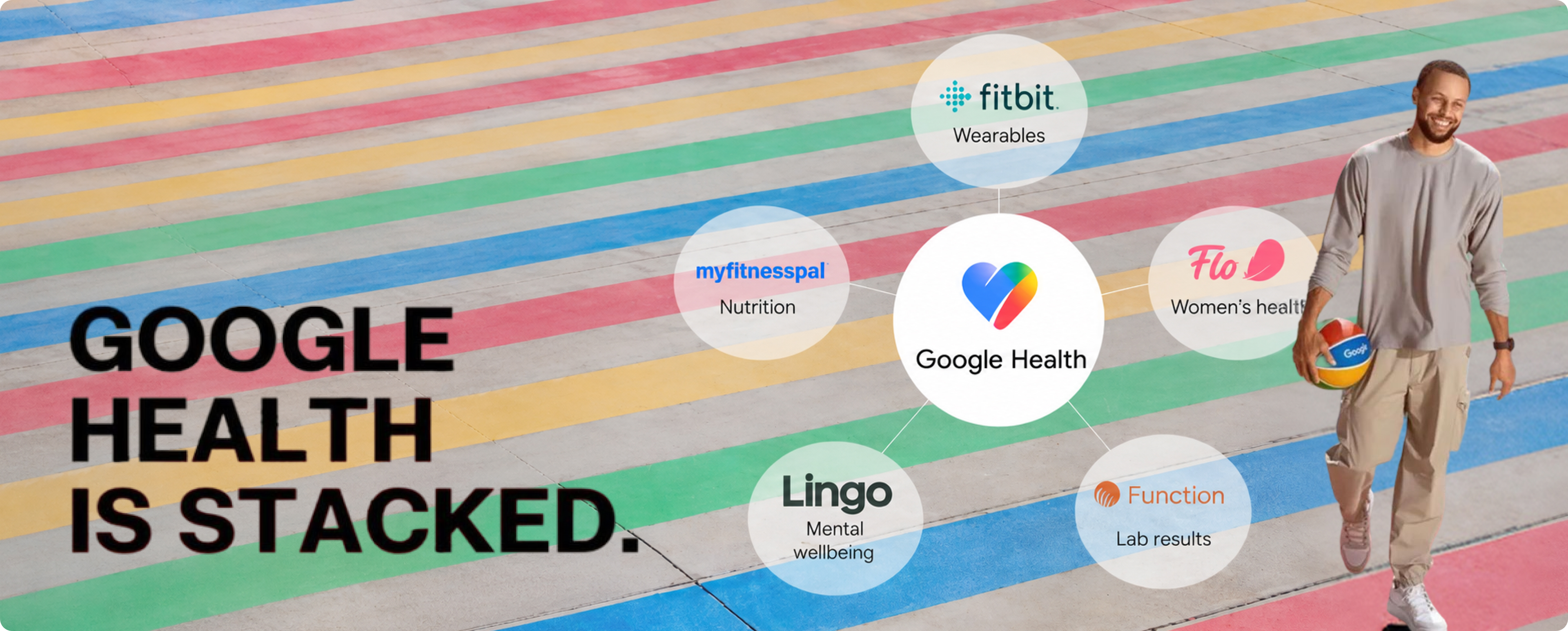
Google’s growing health ecosystem has been hard to miss. Strategic investments in Flo, the period tracking app used by over 70 million people worldwide, and a new partnership with Function, the blood testing and biomarker mapping service, look like the beginning of something much larger - a connected set of consumer health products that share data with one another to give people a genuinely joined-up picture of their wellbeing.
On the surface, this sounds like exactly what patients and consumers have been asking for. More personalised recommendations, clearer signals about the lifestyle choices that shape long-term health outcomes. A single, coherent view of your body rather than a dozen disconnected apps telling you different things.
It is also putting greater pressure than ever on healthcare systems to catch up. The expectation from consumers, shaped by the joined-up digital products they use every day, is that their health data should work the same way. For the NHS, which has long struggled with the challenge of building a unified patient record, that expectation is arriving faster than the infrastructure to meet it.
But consolidation concentrates risk as well as value. And this week surfaced two risks worth taking seriously.
The first risk is trust.
Flo’s recent history is quite instructive. In 2025, Google and Flo agreed to pay a combined $56 million to settle a class action alleging that users’ menstrual and pregnancy data had been shared with third parties for advertising purposes. Neither party admitted wrongdoing and the new partnership comes with a commitment that Flo data will not be used for advertising or sold to third parties. That commitment truly matters. But it also shows how much of this ecosystem rests on trust and how difficult that trust is to rebuild once it has been tested.
Health data is, by definition, the most personal and sensitive data a person owns. The bar for how it is handled needs to be higher than it has sometimes been.
The second risk is access.
Earlier this week, a power event at a Google Cloud data centre in London caused an outage that took Revolut offline for several hours and created disruption across banks, a parcel carrier and even the courts’ video platform. Google’s teams worked hard to restore services and things are largely back up and running. But the reputational damage is likely to take longer to repair than the infrastructure did.
This is where both threads converge into a single, urgent question, what happens when someone needs their health data and the layer that unifies it suddenly becomes inaccessible, however temporarily?
That might be tolerable when the data is a step count or a calorie log. It is a very different matter when it is a cancer screening result, a medication schedule or something equally serious.
Most digital products are designed for the happy path, when everything works as it should. Very few are designed with equal care for the moment when it doesn’t. In health, that moment deserves just as much thought, investment and attention as the ideal user journey.
If the cloud goes down, can a patient still see their most recent results? Does the app communicate clearly what is happening and what they should do next or does it simply display a spinning loader and leave them stranded? Is there a way to reach a real person? Are the most critical pieces of information available offline?
When the data is this personal and the stakes are this high, these are not edge cases. They are part of the core experience and they shape whether people trust a product enough to keep using it, recommend it to others and ultimately allow it to play a meaningful role in their healthcare.
Joined up should not mean a single point of failure. The answer is not necessarily to keep every health product siloed, each with its own separate data and security protocols. The answer is to design the whole system, from infrastructure decisions all the way through to the interface a patient sees, with the day it fails firmly in mind.
This is a challenge we think about constantly in our work at Explosive Brands, designing digital health products and services that are not only effective and beautiful when everything works, but deeply considered, clear and trustworthy when it doesn’t. It is, in our view, one of the most important and underserved areas of health product design right now.
Working on a health-tech product? Get in touch to talk about how design can help.

Contact us