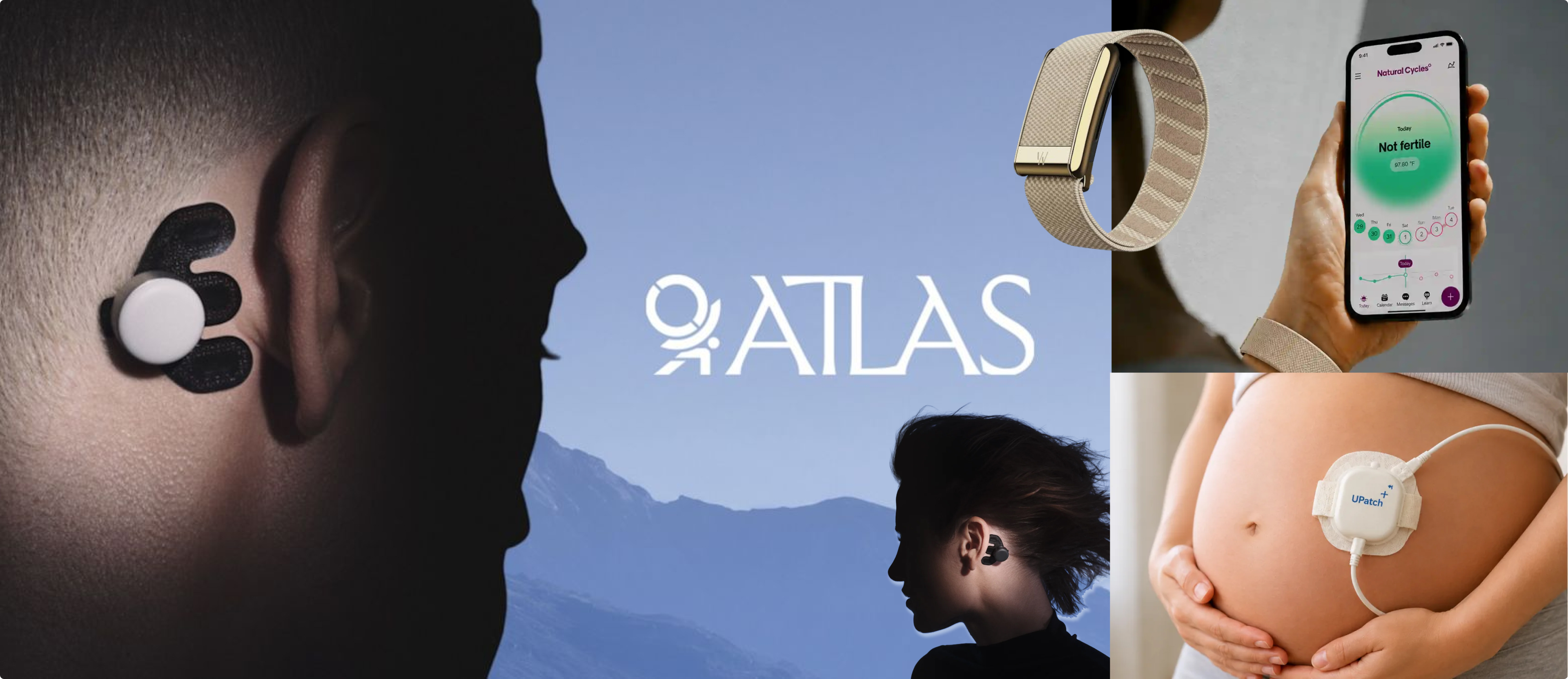
As a creative, design and communications studio working closely with healthcare and technology clients, we're always paying attention to innovation in this space. Wearables are evolving quickly, and the most exciting examples share a common thread: design is woven into healthcare at every level, and user experience should sit at the centre of everything. Here are the wearables that have caught our eye recently.
Can we understanding our everyday behaviours in new ways? Atlas is a tiny brain wearable that sits behind your ear and uses real-time data to explore things like attention, focus and how present you are throughout the day. We love the idea of technology helping us understand ourselves in ways we couldn't measure before and can see a lot of use cases, especially in nurodivergence. But it also raises a bigger question for us - how much information is too much information?
There's a fine line between useful self-awareness and health anxiety, especially when we're suddenly able to see data about something as complex as our own brains. That makes the way information is presented as much a design decision as a technical one. Atlas is backed by years of research across neuroscience, nanotechnology and neural engineering, so we're hopeful there's a thoughtful solution to that side of the experience too. We're very intrigued to see where their development goes.
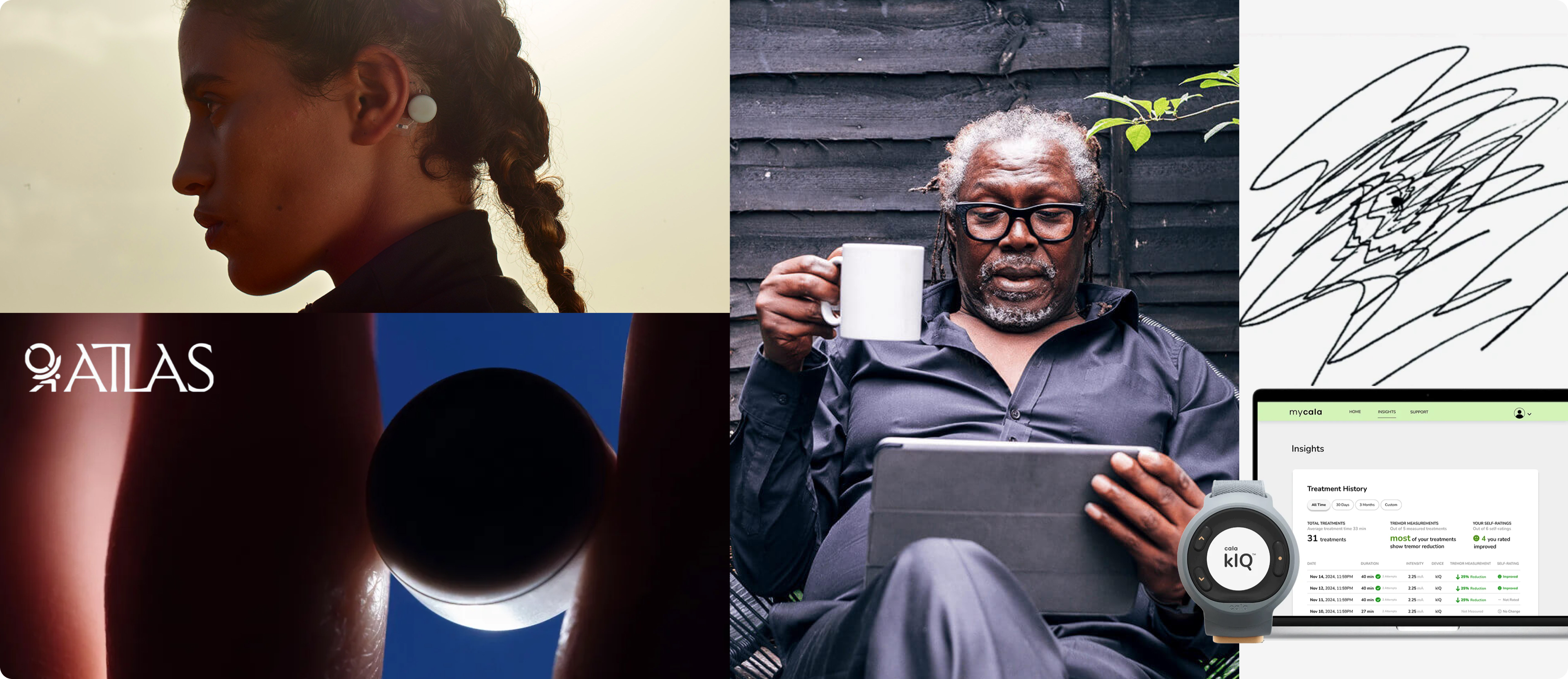
What if a wearable device could give people their freedom back? Cala Health has developed the Cala kIQ, an FDA-cleared wearable device that delivers clinically proven therapy to reduce hand tremors in people living with essential tremor and Parkinson's disease. After a 40-minute therapy session, 9 in 10 users experienced tremor reduction, with relief lasting on average over 90 minutes.
What stands out is that it involves no medication or invasive procedures, just a wristband worn at home, on demand. It allows people to get their autonomy back, returning to reading, cooking and eating without spilling, and to public life. That's what technology in service of real human needs looks like.
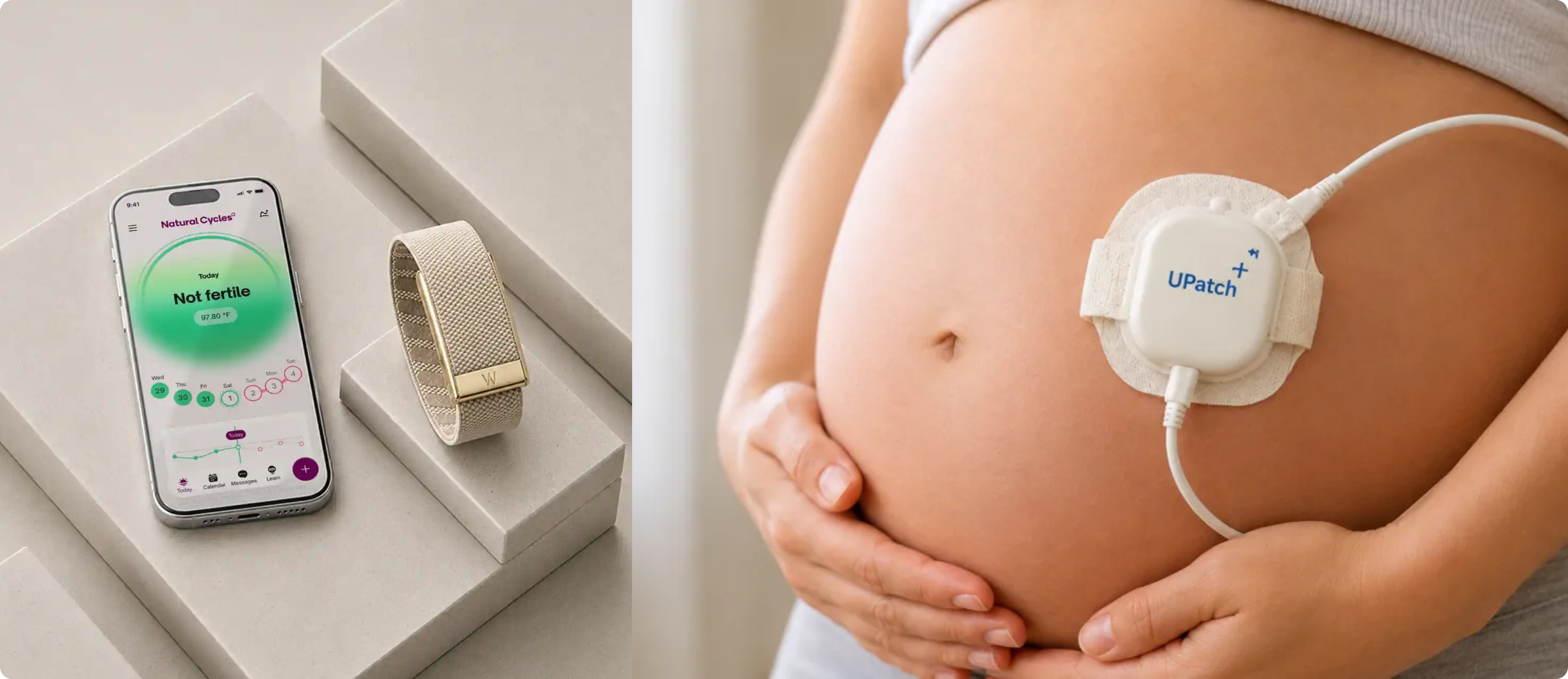
The UPatch - a revolutionary ultrasound patch. Guests on our podcast, Trail Blazers, have highlighted the neglect in female health services, so this is exactly the kind of news that gives us real optimism. Engineers at the University of California San Diego and the University of Oxford, led by Professor Antoniya Georgieva, have developed the UPatch, a small wearable ultrasound patch that continuously monitors a baby's blood flow throughout pregnancy, no sonographer needed.
Rather than relying on snapshot appointments that can miss critical changes, a mother could simply wear it while going about her daily life. In our eyes, this could be a game-changer for high-risk pregnancies. In one trial case, it identified dangerous blood-flow abnormalities in a severe pre-eclampsia patient, prompting intervention four days before delivery. It's genuinely significant research in an area that has been underserved for far too long.
Could wearables be the answer to frictionless fertility tracking? WHOOP has recently integrated Natural Cycles, an FDA-cleared birth control app, offering users hormone-free, non-invasive fertility tracking through a wearable they already own. The integration uses overnight skin temperature data collected by the WHOOP device to determine daily fertility status, helping users prevent or plan pregnancy.
We've talked a lot about the power of wearables for symptom tracking and general health monitoring but seeing that technology applied to cycle health and contraception in such a frictionless way feels like a significant step for female health. Hormone-free birth control that fits naturally into your existing routine, with little additional effort, is exactly the kind of human-centred health innovation we find exciting.
Each of these products succeeds because it starts with a human need. That's the principle behind our work with health-tech clients at Explosive Brands, and it's why we're so excited about where wearables go next.
Working on a health-tech product? Get in touch to talk about how design can help.

Contact us


.svg)
.svg)